
Microwave imaging is an emerging diagnostic technique that uses electromagnetic fields in the microwave frequency range to extract clinically relevant information, while relying on safe and cost-effective instrumentation. A key challenge is the extraction of useful signals from measurements, due to the intrinsic complexity of wave–matter interactions. To address this limitation and improve the sensitivity and specificity of microwave imaging for diagnosing and monitoring pathological conditions, magnetic nanoparticles have been proposed as contrast agents. These nanocomposites are particularly suitable because they can induce variations in the magnetic properties of otherwise non-magnetic media. In addition, their microwave response can be remotely controlled by applying a low-frequency magnetic field of appropriate strength. To date, two main applications have been explored: early breast cancer detection and bone regeneration monitoring. In the former, nanoparticles are dispersed in water-based solutions and selectively accumulate in tumor tissue. In the latter, nanoparticles are embedded within magnetic scaffolds, serving both as therapeutic mediators and as tools for monitoring tissue regeneration. This work reviews the key aspects of contrast-enhanced microwave imaging, along with the specific requirements of these two applications. Then, the design and implementation of a dual-purpose microwave tomographic system capable of supporting both use cases is presented.
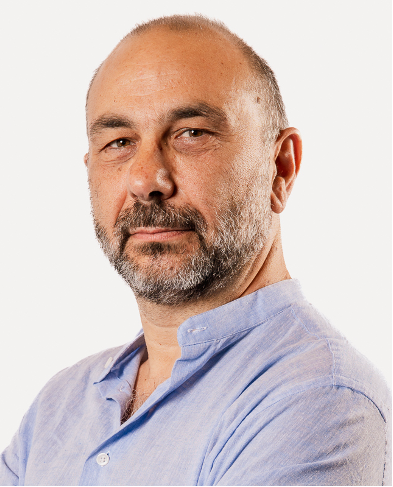
Lorenzo Crocco is Research Director at the Institute for Electromagnetic Sensing of the Environment, National Research Council of Italy (IREA-CNR). His research focuses on electromagnetic scattering methods and applications, with particular emphasis on non-invasive diagnostics and therapeutic uses of electromagnetic fields. He has authored over 120 papers and edited two books. Since 2021, he has been listed in the World’s Top 2% Scientists database. He serves on the Scientific Board of the Italian Electromagnetic Society and the CNR Engineering Department Scientific Board. Since 2014, he has been a Board Member of the European School of Antennas (ESoA). Since 2024, he has represented Italy, San Marino, and Vatican City in the Delegate Assembly of the European Association on Antennas and Propagation (EurAAP). Within EurAAP, he also founded the Working Group on Electromagnetic Technologies for Life Science Applications (ELSA). Lorenzo Crocco is an IEEE Senior Member and URSI Senior Member.