
The lecture will start by describing the conventional state-of-the-art methods for the control of robotic prostheses based on the processing of myoelectric signals, including the use of machine learning (pattern recognition and regression). We will then address the drawbacks of these methods and related challenges for clinical translation and wider use. We will then discuss an alternative approach to controlling bionic limbs, where the main idea is to enhance these systems with additional sensors and cognitive-like processing so that they can perform some functions autonomously (semi-automatic control). Semi-autonomous prosthesis prototypes will be described, and it will be shown how they can improve prosthesis performance while decreasing the cognitive and physical effort of controlling these devices. Finally, we will discuss the new generation of bionic limbs that are enhanced with connectivity allowing them to access the virtually unlimited computational resources of the Cloud and Edge. The radically new functions enabled by the Cloud/Edge will be discussed, including computational offloading, continuous data logging, adaptation and learning as well as remote intervention. The lecture will end by summarizing the pros and cons of the three approaches to prosthesis control (namely, conventional, semi-autonomous, and connected bionics) and perspectives for future developments.
Strahinja Dosen
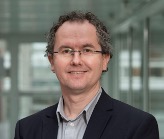
received the Diploma of Engineering in Electrical Engineering and the M.Sc. degree in Biomedical Engineering in 2000 and 2004, respectively, from the Faculty of Technical Sciences, University of Novi Sad, Serbia, and the Ph.D. degree in Biomedical Engineering from the Center for Sensory-Motor Interaction, Aalborg University, Denmark, in 2009. From 2011 to 2017, he worked as a Research Scientist at the Institute for Neurorehabilitation Systems, University Medical Center Gottingen, Germany, and then as an Associate Professor at the Department of Health Science and Technology (HST), Aalborg University (AAU). Currently, he is a Full Professor in the same Department and leads a research group on Neurorehabilitation Systems. Prof. Dosen was a principal investigator for AAU and HST in several EU (Tactility, Wearplex, Sixthsense, and SimBionics) and nationally funded (Robin, Remap, Climb, NeuroMate) projects. He published more than 130 manuscripts in peer-reviewed journals, and his main research interest is the closed-loop control of assistive robotic systems.